MARKET RESEARCH 국내
Samsung Heavy Industries FSRU Contract — KRW 484.8 Billion Deal for One Unit
삼성중공업 FSRU 수주 관련 핵심 이슈를 정리했습니다. 국내 주식 · 공시 분석 삼성중공업 FSRU 수주 — 4,848억 원 규모 1척 계약 체결 2026-05-04 · 삼성중공업 판정 📈 호재 삼성중공업은 아시아 지역 선주로부터 4,848억 원…
Because source linking and editorial review are incomplete, this article is excluded from main analysis listings, site search, and search indexing. Use verified articles and original sources for investment decisions.
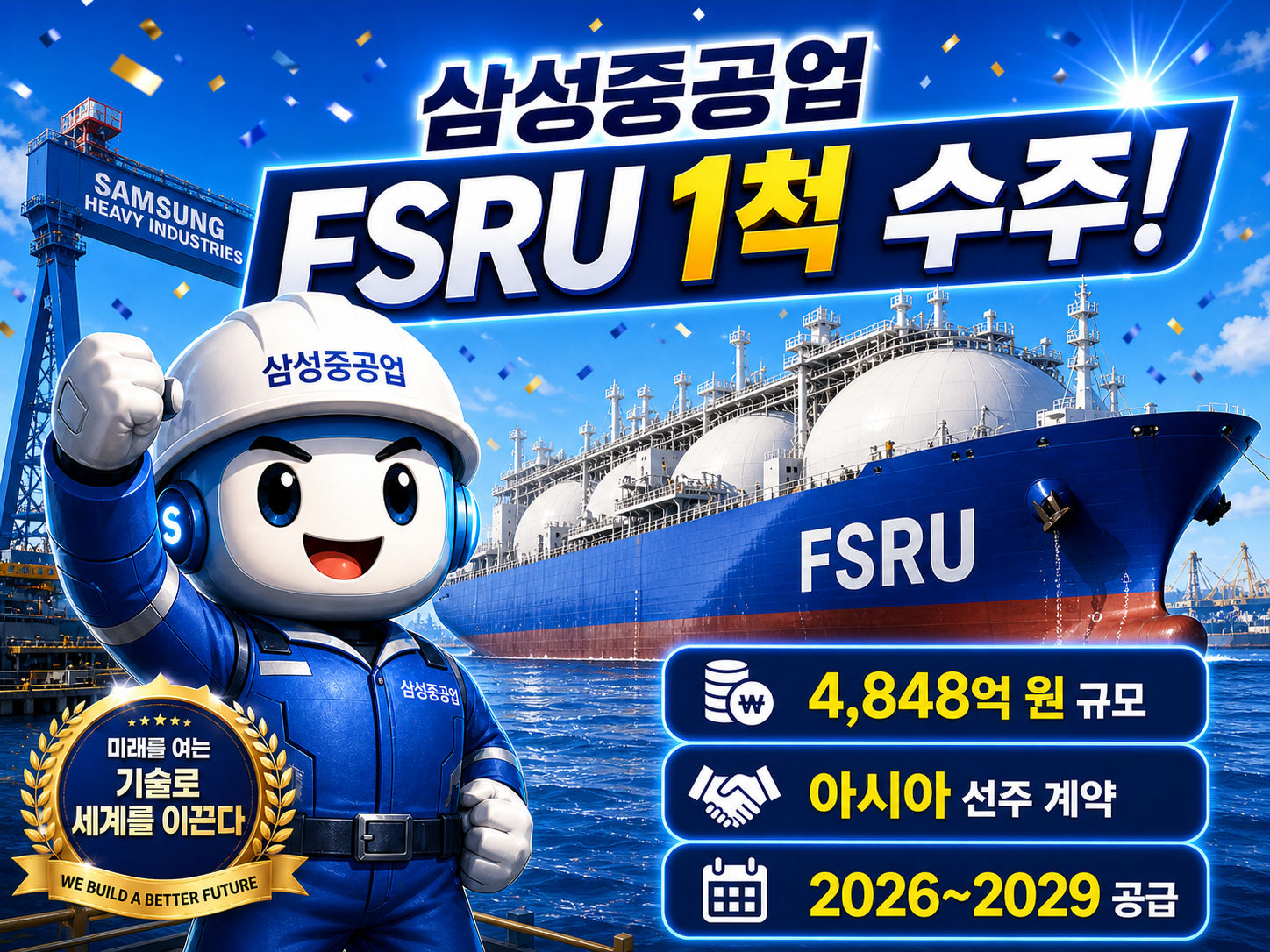
- KRW 484.8 billion contract for one FSRU unit
- Contracted with an Asian region shipowner; construction scheduled from late April 2026 to mid-February 2029
- Includes payment terms for deposit and advance payments
- Q1 sales of KRW 2.9023 trillion and operating profit of KRW 273.1 billion, a 122% increase year-over-year
- Contract value represents approximately 4.6% of 2025 sales estimated at KRW 10.65 trillion
Global LNG Market and FSRU Growth Drivers
The global energy paradigm is rapidly shifting, with LNG (liquefied natural gas) playing a pivotal role as a ‘bridge fuel’ in the transition to cleaner energy. Particularly in emerging markets such as Southeast and South Asia, growing energy demand necessitates the expansion of LNG infrastructure.
FSRUs (Floating Storage and Regasification Units) offer key advantages over onshore LNG terminals, including lower upfront capital expenditure and faster deployment. Consequently, demand is surging especially among emerging countries with underdeveloped infrastructure.
Against this backdrop, Samsung Heavy Industries’ recent FSRU contract is significant, reinforcing its strategic footprint across the LNG supply chain beyond a conventional shipbuilding order.
Samsung Heavy Industries’ Order Status and Competitive Strengths
Recognized as a global top-tier player in shipbuilding and offshore plants, Samsung Heavy Industries has established a dominant position particularly in FLNG (Floating Liquefied Natural Gas) units. Headquartered in Geoje, Gyeongnam Province, the company operates major shipyards producing LNG carriers, container ships, and high-value-added offshore plants including FPSOs and FSRUs.
The KRW 484.8 billion FSRU contract covers nearly a 2-year and 10-month construction period from late April 2026 to early 2029, underscoring Samsung Heavy Industries’ advanced technical capabilities in FSRU design and construction. This contract size equates to about 4.6% of the company’s recent Q1 2026 sales of KRW 2.9023 trillion and operating profit of KRW 273.1 billion, extending a strong earnings momentum.
Among Korea’s big three shipbuilders, Samsung Heavy Industries differentiates itself by focusing strongly on LNG offshore plants. Whereas HD Hyundai Heavy Industries and Hanwha Ocean primarily concentrate on LNG carrier orders, Samsung’s offshore plant portfolio, including FLNG and FSRU, amounts to USD 8.2 billion, significantly surpassing its merchant ship segment.
Stock Price and Valuation Analysis
As of April 30, 2026, Samsung Heavy Industries’ stock closed at KRW 32,350, with approximately 880 million outstanding shares, implying a market capitalization of about KRW 28.5 trillion. The stock trades at a PER of 52.19x and PBR of 5.56x, reflecting high expectations for growth priced in.
Sales for 2025 are forecasted at KRW 10.65 trillion with an operating profit of KRW 862.2 billion. Operating profit is expected to increase by approximately 79–82% in 2026 compared to the prior year, driven by improved profitability from a larger share of high-value-added LNG and offshore plant orders.
However, the stock’s upside is somewhat capped relative to its 52-week high of KRW 34,400, and investors should remain cautious of the inherent volatility in shipbuilding order books and risks from global raw material price fluctuations.
Investment Implications
This FSRU order serves as a critical milestone that not only fortifies Samsung Heavy Industries’ LNG market standing but also confirms potential for future expansion in high-value shipbuilding orders. Although the contract size is modest relative to overall offshore plant targets, it holds substantial strategic value in technology validation and portfolio diversification.
Technical chart indicators show a steady uptrend in stock price since early 2026 accompanied by increasing trading volume. Foreign and institutional investors have been net buyers, suggesting a growing market recognition of Samsung Heavy Industries’ medium to long-term growth prospects.
Samsung Heavy Industries’ key differentiator vis-à-vis competitors lies in its concentration on offshore plants such as FLNG and FSRU. Unlike HD Hyundai Heavy Industries, which targets merchant ship orders, Samsung’s offshore plant orders exceed half of its total portfolio, positioning it to benefit from the expansion of the global LNG infrastructure market. Nonetheless, risks related to delivery delays and increasing construction costs remain and warrant continuous monitoring.
In summary, despite a relatively high valuation, the company is entering a phase where earnings improvement from expanding high-margin LNG and offshore plant orders is becoming tangible, presenting an attractive investment opportunity from a medium- to long-term perspective.
In-Depth Q&A for Active Investors
1. What impact does this FSRU order have on Samsung Heavy Industries’ existing order backlog?
The KRW 484.8 billion contract adds a stable increment to Samsung Heavy Industries’ total order backlog. While relatively small compared to the annual order intake target of USD 7.9 billion (over KRW 10 trillion) in 2025, it is significant for technological credibility and market diversification within the specialized FSRU segment. This deal is expected to act as a catalyst for securing similar or larger offshore plant orders in the future.
2. Why is FSRU demand growing rapidly?
Onshore LNG terminal construction requires substantial costs and lengthy timelines, whereas FSRUs, as floating units, offer lower initial investment and shorter installation periods, making them preferred by emerging countries. Particularly, nations with limited LNG import infrastructure can flexibly expand LNG receiving capacity, leading to a surge in global demand aligned with the energy transition. Samsung Heavy Industries possesses optimized technologies suited for such evolving market needs.
3. How competitive is Samsung Heavy Industries in FSRU and offshore plant segments compared to peers?
Among the big three Korean shipbuilders, Samsung Heavy Industries holds unique expertise and a strong order record in complex offshore plants such as FLNG and FSRU. While HD Hyundai Heavy Industries and Hanwha Ocean focus mainly on LNG carrier orders, Samsung’s offshore plant portfolio is valued at USD 8.2 billion, substantially ahead of its merchant ship segment, maintaining a differentiated strategy. Therefore, an expansion of market share in offshore plants is anticipated.
4. How are risks from delivery delays and cost inflation managed?
The shipbuilding and offshore sectors generally face risks from raw material price volatility and supply chain issues, which can lead to delivery delays and cost increases. Samsung Heavy Industries mitigates these risks through its long-established project management capabilities and collaborations with large shipowners. Nevertheless, investors should continuously observe changes in global economic conditions and geopolitical uncertainties that contribute to volatility.