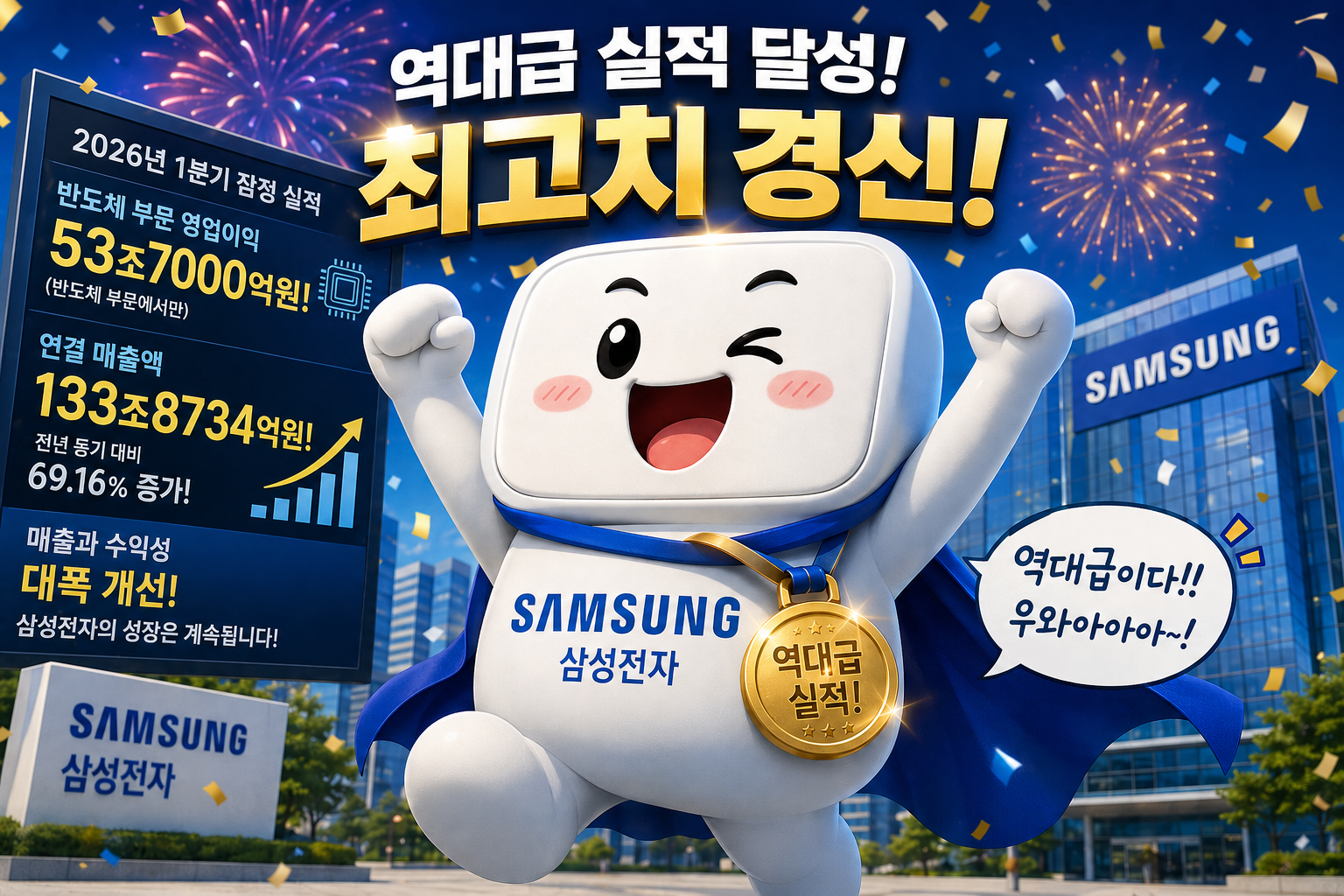
Samsung Electronics Preliminary Results — Q1 Semiconductor Operating Profit of 53.7 Trillion KRW, Revenue of 133.8 Trillion KRW Recorded
📈 Positive
In Q1 2026, Samsung Electronics recorded an outstanding semiconductor operating profit of KRW 53.7 trillion and consolidated revenue of KRW 133.8 trillion, significantly exceeding market expectations. This strong performance is attributed to the sold-out status of AI-use HBM (High Bandwidth Memory) and simultaneous memory price increases, resulting in a rare robust earnings surprise across the industry.
Key Drivers of the Earnings Surprise
The achievement of KRW 53.7 trillion in semiconductor operating profit in Q1 by Samsung Electronics stemmed from several critical factors. First, the rapid growth of the AI industry led to a sold-out status for HBM (High Bandwidth Memory), effectively exhausting the entire supply. HBM is an essential component for high-performance computing and AI accelerators, and Samsung’s superiority in this area translates into a clear margin expansion advantage over competitors.
Second, the average selling prices (ASP) of memory semiconductors have entered an upward phase, significantly improving overall margins. Both DRAM and NAND have been able to maintain price support thanks to robust AI-driven demand.
Lastly, solid performances in the Foundry segment and the MX (Mobile & Network) business also contributed to the expansion of consolidated revenue and profits. In particular, the increased utilization rate in Foundry demonstrates Samsung Electronics’ completion of the semiconductor value chain.
Memory Semiconductor Cycle and Current Position
The memory industry is traditionally known for its high cycle volatility. The year 2023 marked a trough characterized by bottoming memory prices and supply reductions. From 2024 onwards, recovery commenced as AI demand gained momentum.
The Q1 2026 results indicate that this recovery phase is not merely a base effect but the beginning of a substantial upswing driven by technology and demand synergy. The sold-out situation for HBM particularly signals that AI demand is exceeding prior expectations. This suggests a qualitative shift underpinned by new demand rather than a peak signaling the end of the memory cycle.
Of course, to sustain memory price increases, global supply chain stability and Samsung’s advantage over competitors must be maintained. Key factors to watch from next year will be progress in next-generation HBM adoption and the certification of new AI chipsets.
Samsung Electronics’ Positioning Against Competitors
Competition in the AI memory market is fierce among SK Hynix (domestic) and Micron Technology (USA), but Samsung currently holds advantages on multiple fronts. Its fully booked HBM production capacity grants Samsung strong pricing power, directly contributing to short-term margin improvements.
SK Hynix is accelerating next-generation HBM certifications and capacity expansions but still lags slightly behind Samsung in market share growth and shipment timing. Micron’s product portfolio is more focused on data center DRAM, indicating a relatively delayed entrance into the high-performance AI memory market compared to Samsung and SK Hynix.
In the foundry sector, Samsung is gradually holding its ground against TSMC through advancements in technology and diversification of its customer base, positively impacting the stability of semiconductor operating profits.
Valuation and Investment Judgment
Samsung Electronics’ strong Q1 earnings provide a positive signal for its stock price in the short term. However, the current share price appears to already reflect much of these expectations. From a valuation perspective, the memory market recovery and increased AI demand support mid-to-long-term earnings improvements, although volatility remains.
Investors should closely monitor external variables such as competitors’ aggressive capacity expansions starting next quarter, global economic uncertainties, and ongoing US-China trade tensions. At present, Samsung Electronics stock is attractive as a leading representative in the expanding AI memory market, but appropriate risk management should accompany exposure due to cycle volatility.
Independent Analysis: Charts, Supply & Demand, Competitor Comparison
Looking at the charts, Samsung Electronics’ stock price has steadily risen since the second half of 2025 on expectations of recovery in the semiconductor industry. Following the Q1 preliminary earnings announcement, the stock surged sharply, reflecting renewed market confidence due to concrete evidence of sold-out HBM orders. Trading volume also increased significantly relative to usual levels, indicating positive supply and demand dynamics driven by institutional and foreign investors.
Compared to competitors, SK Hynix’s sales growth rate last quarter was somewhat lower than Samsung’s, and Micron has yet to fully enter the AI memory revenue transition stage. Samsung’s foundry utilization rate rise particularly aligns with increased demand for smartphones and automotive components domestically and abroad, creating synergy.
From a supply-demand standpoint, expanded foreign investor participation suggests momentum may continue in the short term, but if valuation pressure relative to fundamentals intensifies, profit-taking could emerge quickly. Therefore, cautious consideration is advised against overly aggressive buying, especially near peak valuations.
In-depth FAQ
Q1. How significant is Samsung Electronics’ KRW 53.7 trillion operating profit in Q1?
An operating profit exceeding KRW 50 trillion in a single quarter is exceptionally rare since the previous memory boom. This reflects the combined effects of rising memory prices and increased sales of high-value AI-use HBM products. It signals a structural profit improvement beyond mere seasonal gains.
Q2. How likely is it that the HBM sold-out status will continue?
The sold-out status indicates demand significantly outpacing supply, but over the mid-to-long term, the supply-demand balance could shift due to competitors’ capacity expansions and new generation product launches. Nonetheless, current AI demand momentum and smooth customer certification processes suggest strong demand persistence in the near term.
Q3. Will Samsung’s earnings superiority over competitors persist?
Currently, Samsung holds a technological and production capacity edge in HBM and foundry businesses, supporting short-to-medium-term earnings leadership. However, SK Hynix’s progress on next-generation HBM certification and Micron’s data center memory strategy are evolving rapidly, making the competitive landscape fluid.
Q4. What external factors could impact future stock volatility?
Key risk factors include global recession fears, ongoing US-China trade conflicts, potential semiconductor oversupply, and possible slowdowns in AI investment cycles. Notably, if AI demand weakens faster than expected, pressure on memory prices could intensify significantly.